
Turn a product idea into a plan your team can build.
Bring your brief, map the user's journey, and shape an end-to-end first release. StoriesOnBoard keeps the plan visible while AI helps you explore possibilities, develop stories, and review what is missing.
Start with a problem, a user, and a boundary
A useful planning brief explains who needs help, what they are trying to accomplish, and where the current experience breaks down. Include the evidence you already have: customer conversations, a requirements document, support requests, or constraints from the existing product. Separate observations from assumptions before asking AI to suggest scope.
For our illustrative meal-ordering service, the first user is a customer ordering dinner from a nearby restaurant. The first outcome is simple: select a meal, pay, know when it will arrive, and get help if something is wrong. Restaurant administration and courier scheduling belong to different journeys; they should not quietly expand this first slice.
- Person
- A first-time customer ordering dinner
- Outcome
- Choose, pay, and receive a meal
- First release
- One complete ordering journey
- Open question
- What happens if payment fails?
- Bring
- A product description, primary persona, desired outcome, known constraints, and explicit exclusions.
- Leave with
- A brief the team can challenge, with unresolved questions recorded rather than filled with guesses.
Build the backbone before filling the backlog
Goals describe what the user wants to achieve. Steps break those goals into a narrative sequence. Stories describe smaller pieces of capability underneath each step. One goal can contain several steps; it does not need a duplicate card above every column.
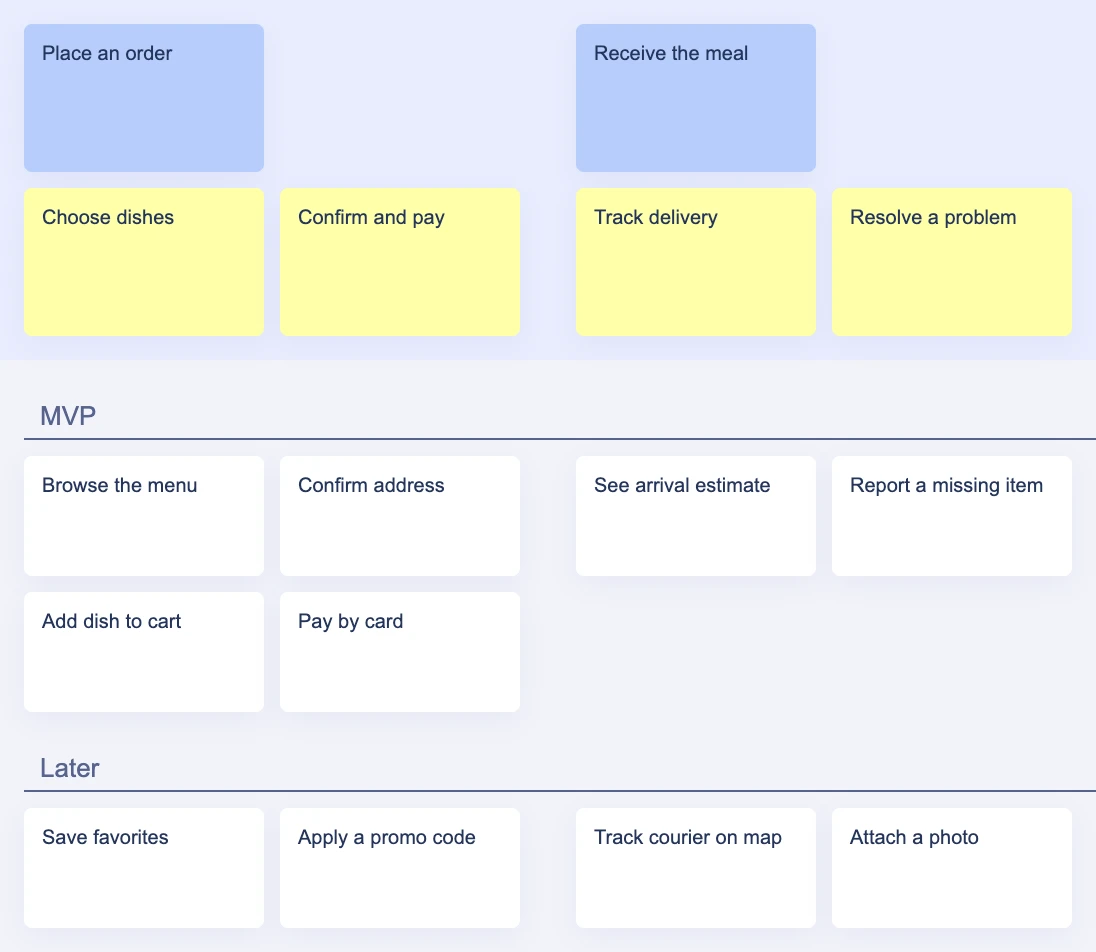
In the example, Place an order contains Choose dishes and Confirm and pay. Receive the meal contains Track delivery and Resolve a problem. This arrangement makes a missing part of the experience easier to discuss than a list of disconnected feature names. AI Assist can propose goals, steps, and stories; the team still reviews their relevance and ordering.
Starting point
A feature list: search, payments, notifications, reviews, discounts.
More useful result
A customer journey: choose a dish → confirm and pay → track delivery → resolve a problem.
Review with your team: Can a teammate explain the user's next action at every step? Remove duplicates and distinguish a journey step from an implementation task.
Read the documentation: Build a story map with AI Assist
Choose a thin release that still works end to end
Read across the MVP lane, not down a single feature column. The first release needs enough of every essential step to make the promised outcome possible. A polished menu browser is not a usable meal-ordering service if the customer cannot confirm an address or resolve a failed delivery.
In this example, saved favorites and promotional codes can wait. Address confirmation, an arrival estimate, and a way to report a missing item support the first complete experience. This is an illustrative scope decision, not a universal checklist: your customer evidence and operational model may lead to a different slice.
- Ask what can wait
- Remove convenience without breaking the user's outcome. Record why each deferred story can move to a later release.
- Check the uncomfortable paths
- Review payment failure, missing information, cancellation, and support handoffs before calling the slice coherent.
Turn selected stories into testable work
Refine the next release in detail instead of elaborating every future idea. A short card title helps you scan the map; the description should explain the actor, behavior, benefit, acceptance criteria, and unresolved decisions. Keep neighboring steps in view so that local requirements do not contradict the overall journey.
For Confirm address, define what a customer can review and change, when validation happens, and what the interface should explain if delivery is unavailable. Do not let AI invent delivery zones or promise a refund policy. Those are product decisions that need an owner.
Confirm address
As a customer, I want to check the delivery address before paying.
- The selected address is visible before payment.
- The customer can return to edit it.
- Editing preserves the cart contents.
To decide: required fields and delivery eligibility.
Starting point
Confirm address — a title with no agreed behavior.
More useful result
Before payment, the customer can review the selected delivery address and return to edit it without losing the cart.
Review with your team: Decide how eligibility is checked and which address fields are required. Only then finalize the acceptance criteria.
Choose where you want AI to help
Use AI Assist when you want suggestions while working directly on the map. Use an MCP-connected agent when the task starts in a conversation or document and needs to read or update the live board. A skill adds a repeatable procedure to that agent workflow; it does not replace the connection or the team's decisions.
A practical review loop is to inspect the current map, request a proposal for a defined slice, review it, apply the approved changes, and read back the result. Confirm that created stories sit under the intended step and release. The outcome is a shared planning artifact, not proof that the feature is implemented.
| Starting situation | Useful next action |
|---|---|
| An idea with unclear users | Clarify the problem and assumptions before creating cards. |
| An agreed brief | Build the backbone, then propose stories under each step. |
| An existing backlog | Inspect gaps and contradictions before adding more work. |
| A selected release | Refine acceptance criteria and prepare the implementation handoff. |
Built with StoriesOnBoard AI + MCP
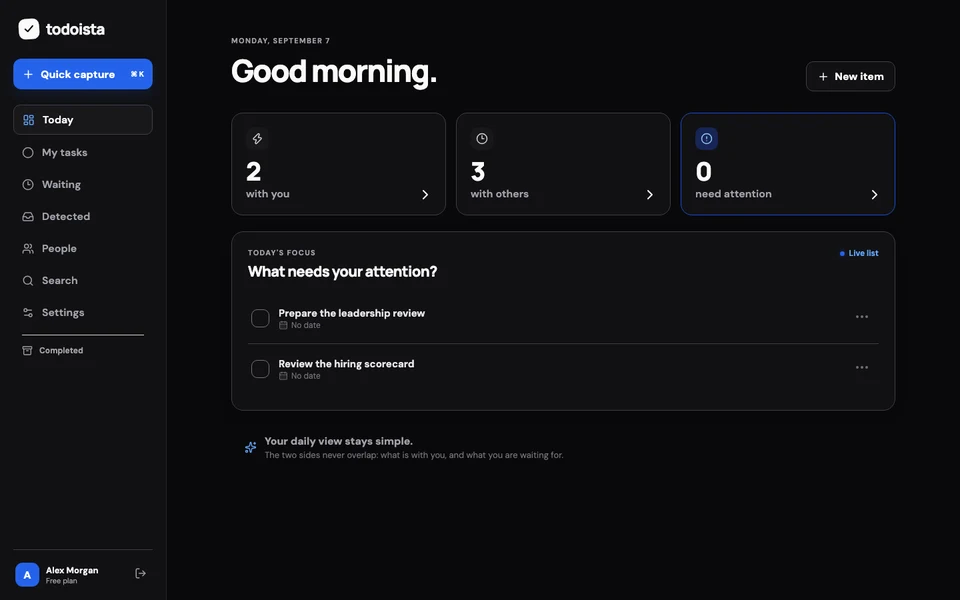
Todoista
Keep track of your tasks, delegated commitments, and the right moment to follow up.
 Explore Todoista
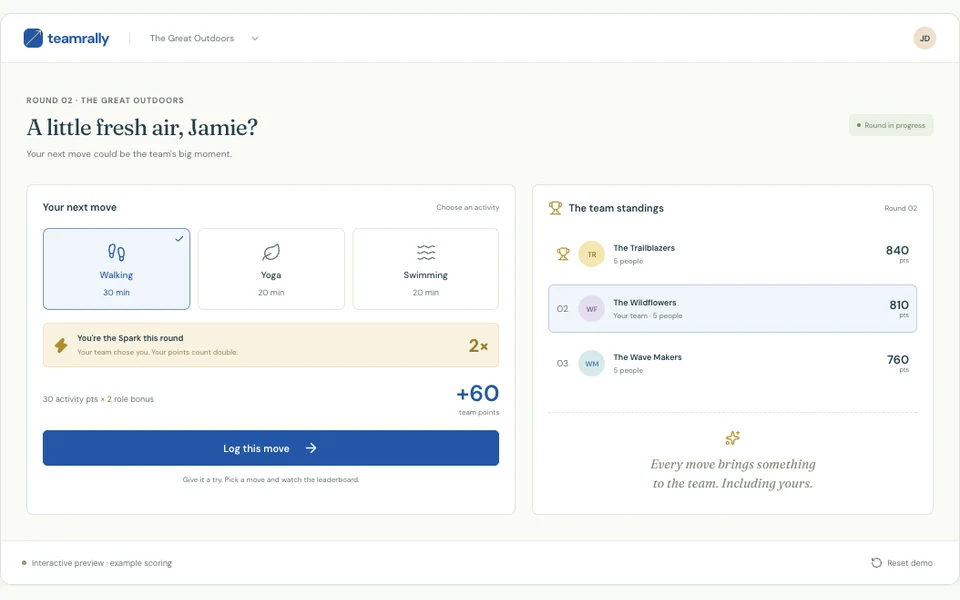
TeamRally
Explore an interactive preview of a team movement challenge, with activities, role bonuses, and shared scores.
 Explore TeamRally
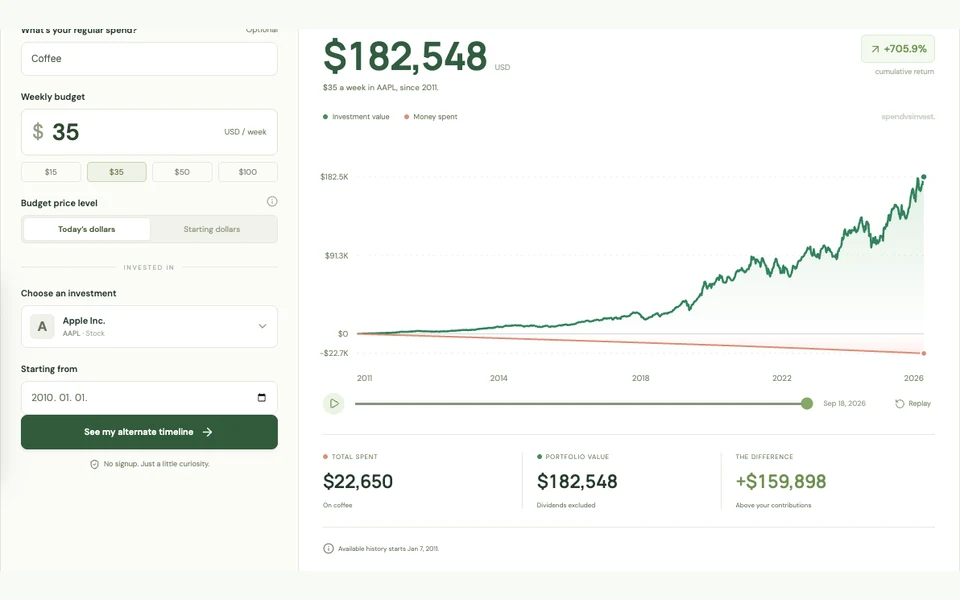
SpendVsInvest
Explore how everyday spending compares with a hypothetical investment using historical market data.
 Explore SpendVsInvest
Clear answers before you start.
Do I need a complete PRD before I start?+
No. A concise brief can be enough to begin mapping. Make missing information explicit and use discovery questions to resolve it. An agent should not treat an assumption as a validated customer requirement.
Does an AI-generated backlog become the plan automatically?+
It should be reviewed. Check the journey, duplicated scope, missing failure paths, and the first release. The planning workflow should preserve human decisions about what belongs in the product.
Can I work from an existing map?+
Yes. Start by reviewing its goals, steps, stories, and release boundaries. Ask for a bounded improvement rather than regenerating the board and losing the reasoning already recorded there.
Try one focused workflow on your own product.
Choose a real question, keep the scope small, and review the result with the people who own the decision.
Start your story map